The world of technology has moved at a dizzying pace since the public release of ChatGPT, which introduced millions to the power of generative language models. For the past few years, we have been living in the era of “Assistant AI,” where we ask a chatbot a question and receive a helpful, text-based response. However, as we move through late 2025, a much more powerful and transformative shift is occurring in the corporate world known as the Rise of Agentic AI.
Unlike standard chatbots that simply generate content, Agentic AI is designed to take action, make decisions, and execute complex workflows across multiple software platforms without constant human supervision. These “AI Agents” do not just tell you how to solve a problem; they go out and solve it by interacting with your email, your project management tools, and your financial software.
This transition represents the leap from passive artificial intelligence to active digital workers that can function as autonomous members of a business team. Companies that successfully integrate these agents are seeing massive gains in productivity that far exceed the benefits of simple automation. We are witnessing the birth of a new digital workforce that is redefining the very nature of human-led enterprise and operational efficiency. In this deep dive, we will explore why Agentic AI is the true future of business and how it is moving far beyond the capabilities of a simple conversation.
Defining Agentic AI vs. Traditional Chatbots
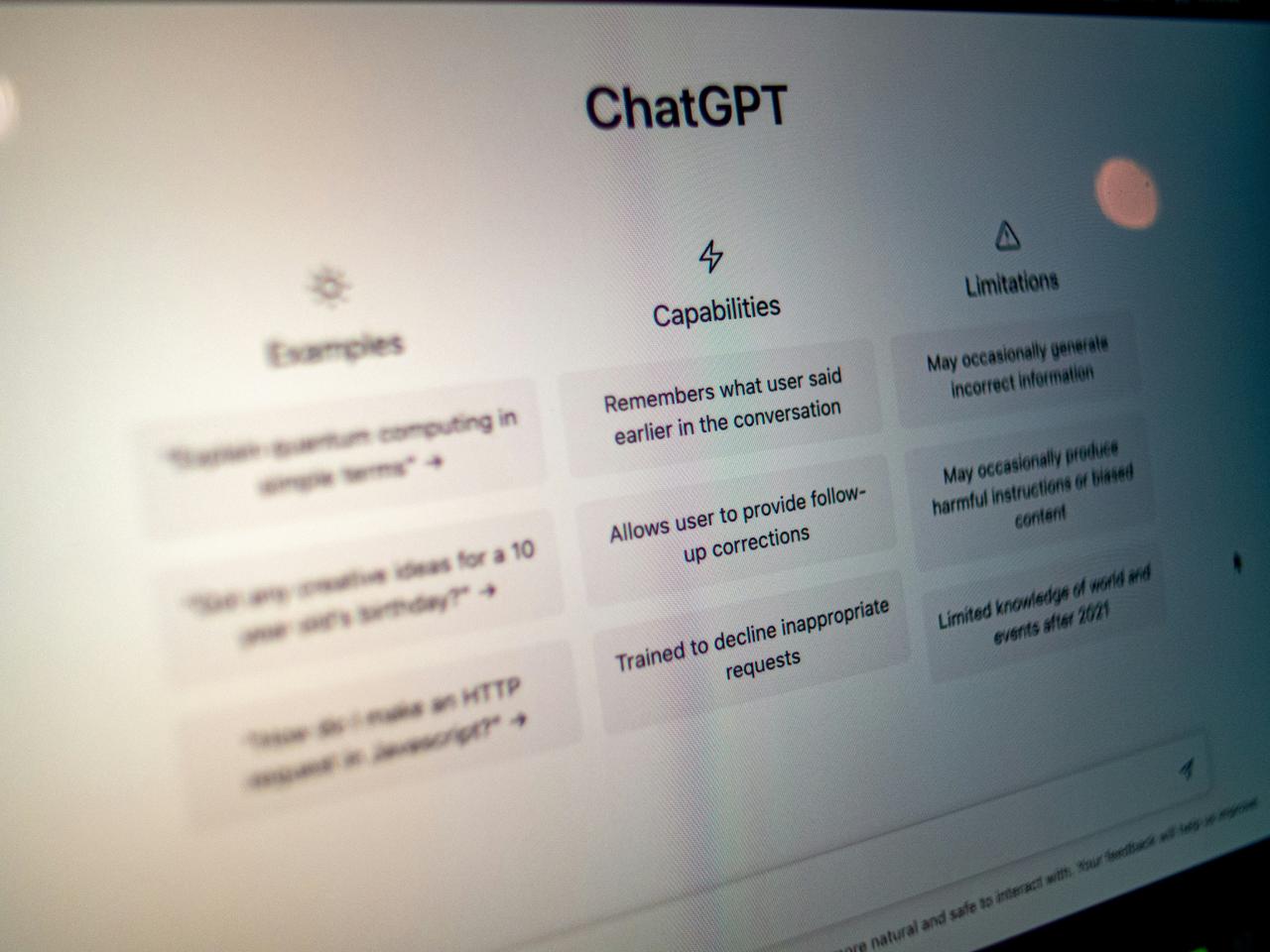
To understand the magnitude of this shift, we first need to distinguish between a standard Large Language Model (LLM) and an Autonomous Agent. A traditional chatbot like ChatGPT is primarily a sophisticated text predictor that requires a human to prompt it for every single step of a task. It is a brilliant advisor, but it lacks the “agency” to perform tasks in the physical or digital world outside of its chat window.
Agentic AI, however, possesses the ability to reason, plan, and use external tools to achieve a high-level goal provided by a human. If you tell an AI Agent to “organize a marketing campaign,” it doesn’t just write a plan; it creates the graphics, schedules the social media posts, and monitors the budget. It can sense its environment, identify obstacles, and pivot its strategy in real-time to ensure the objective is met.
A. Autonomy allows the AI to operate without a human “babysitter” for every micro-decision made during a complex process.
B. Tool use enables the agent to interact with APIs, databases, and third-party software like Slack, Salesforce, or Trello.
C. Planning capabilities mean the agent can break down a large goal into smaller, logical steps before executing them.
D. Self-correction allows the agent to check its own work and fix errors if a particular action fails to produce the desired result.
E. Long-term memory ensures the agent remembers past successes and failures to improve its performance over time.
The Architecture of an AI Agent
The “brain” of an AI agent is still a powerful language model, but it is surrounded by a framework that gives it hands and eyes. This architecture usually involves a “Reasoning Loop” where the AI thinks about a problem, decides on an action, observes the result, and then thinks again. This cycle continues until the task is completed or the agent reaches a state where it needs human intervention.
These agents use “Sovereign Identities” to log into corporate systems securely, acting as digital employees with specific permissions. They are often specialized rather than general-purpose, with one agent focusing on sales while another focuses on cybersecurity. This specialization allows them to become experts in their specific domain, providing a level of accuracy that a general chatbot cannot match.
A. The Perception Layer gathers data from various digital inputs like emails, web scrapers, and internal company databases.
B. The Decision Engine uses high-level reasoning to determine which tool or action is most appropriate for the current step.
C. The Action Layer executes the decision by sending commands to external software or generating specific digital outputs.
D. The Evaluation Layer monitors the success of the action and decides whether to proceed or try a different approach.
E. The Human-in-the-Loop (HITL) interface allows the agent to “ask for help” if it encounters an ethical dilemma or a high-risk decision.
Transforming Customer Service into Customer Success
Customer service has always been the first frontier for AI, but Agentic AI is taking it from simple FAQ responses to full-scale problem resolution. Instead of just telling a customer how to return a product, an AI agent can verify the purchase, generate a return shipping label, and process the refund. It can also follow up with the customer a week later to ensure they are satisfied with the experience.
This shift reduces the burden on human agents, allowing them to focus on high-emotion cases that require true empathy. The result is a much faster resolution time and a more personalized experience for the consumer. Businesses are finding that AI agents can handle up to 80% of support tickets from start to finish without any human involvement.
A. Proactive engagement allows agents to reach out to customers before they even realize they have a problem.
B. Multi-modal communication means the agent can switch between text, voice, and even video to assist the customer.
C. Sentiment analysis helps the agent detect frustration or anger, triggering an immediate hand-off to a human manager.
D. Cross-selling opportunities are identified by the agent based on the customer’s real-time needs and historical data.
E. Language localization ensures the agent can provide world-class support in dozens of languages simultaneously.
Agentic AI in Sales and Marketing
In the world of sales, timing is everything, and AI agents are proving to be the ultimate assistants for lead generation and nurturing. An AI sales agent can research a potential client, find their social media profiles, and draft a hyper-personalized outreach email. It can then track if the email was opened and schedule a follow-up at the exact moment the client is most likely to respond.
Marketing agents are equally powerful, capable of running A/B tests on thousands of different ad variations in real-time. They can analyze which colors, headlines, and images are performing best and automatically shift the budget to the winning combinations. This level of optimization is humanly impossible to achieve at the scale and speed that an agent can operate.
A. Lead scoring is performed automatically by agents who analyze a prospect’s digital footprint and intent signals.
B. Content creation agents can generate blog posts, social media updates, and newsletters that match the brand’s unique voice.
C. Social listening agents monitor the internet for mentions of a brand and respond to queries or complaints in seconds.
D. Dynamic pricing agents adjust the cost of products based on demand, competitor prices, and the time of day.
E. Personalization engines use AI agents to create unique website experiences for every individual visitor.
Automating Financial Operations
The finance department is one of the most promising areas for Agentic AI because it is filled with rules-based, data-heavy tasks. AI agents can manage accounts payable and receivable by cross-referencing invoices with bank statements and flagging any discrepancies. They can even negotiate better terms with vendors by analyzing historical data and market trends.
Tax compliance and auditing are also being transformed, as agents can scan thousands of transactions for signs of fraud or error. This provides a level of security and transparency that traditional manual accounting simply cannot provide. For small businesses, an AI agent can act as a “Virtual CFO,” providing real-time advice on cash flow and investment strategies.
A. Expense management agents can automatically categorize employee receipts and detect policy violations.
B. Predictive budgeting agents use historical data to forecast future revenue and suggest where to cut costs.
C. Fraud detection agents monitor transaction patterns 24/7 to catch suspicious activity before it becomes a major loss.
D. Automated payroll ensures that every employee is paid correctly and on time, including complex tax withholdings.
E. Investment agents can manage corporate treasuries by moving funds into high-yield accounts based on market conditions.
The Rise of “Agentic Swarms”
The next stage of this evolution is the “Agentic Swarm,” where multiple specialized AI agents work together to solve a single, massive problem. For example, a “Software Development Swarm” might consist of a coder agent, a tester agent, a designer agent, and a project manager agent. They communicate with each other in their own digital language to build and deploy software faster than a human team ever could.
This collaborative approach allows companies to scale their operations without a linear increase in headcount. These swarms can be spun up for a specific project and then dismantled once the goal is achieved. It represents a move toward a “Liquid Enterprise” where resources are allocated dynamically by AI based on real-time business needs.
A. Inter-agent communication protocols allow different AI models to share data and coordinate their actions effectively.
B. Hierarchical swarms feature a “Manager Agent” that delegates tasks to specialized “Worker Agents” and reviews their output.
C. Conflict resolution algorithms ensure that if two agents disagree on a strategy, they can find a logical compromise.
D. Swarm scalability means a company can deploy thousands of agents for a holiday rush and scale back in January.
E. Distributed problem solving allows a swarm to tackle multiple parts of a project simultaneously, drastically reducing time-to-market.
Ethical Considerations and AI Governance
As businesses hand over more control to autonomous agents, the question of ethics and governance becomes critical. Who is responsible if an AI agent makes a mistake that leads to a financial loss or a legal violation? Companies must develop “AI Guardrails” to ensure that their agents operate within the bounds of human values and corporate policy.
Transparency is also a major concern, as it can be difficult to understand why an AI agent made a specific decision. This “Black Box” problem is being solved through “Explainable AI” (XAI), which requires agents to provide a logical audit trail for every action they take. Establishing trust between humans and their AI counterparts is the most important part of the implementation process.
A. Bias mitigation is necessary to ensure that AI agents do not discriminate against certain groups of people during hiring or lending.
B. Data privacy protocols must be strictly enforced to prevent agents from mishandling sensitive customer or corporate information.
C. Accountability frameworks define the legal and professional responsibility for the actions taken by autonomous systems.
D. Kill-switch mechanisms provide a way for humans to instantly stop an agent if it begins to behave in an unexpected or harmful way.
E. Ethics boards are being created within corporations to oversee the deployment and behavior of Agentic AI.
Preparing Your Workforce for the Agentic Shift
The rise of AI agents does not mean that human workers are becoming obsolete; rather, their roles are changing. Instead of being “doers,” humans are becoming “orchestrators” or “directors” of AI teams. The most valuable skill in 2026 is no longer specialized technical knowledge, but the ability to manage and guide autonomous digital workers.
This requires a massive reskilling effort across all levels of the organization. Employees need to learn how to write high-level “mission statements” for AI agents and how to audit their performance. The human-AI partnership is the new competitive advantage, and those who embrace it will be the leaders of the next industrial revolution.
A. Prompt engineering is evolving into “Agent Engineering,” focusing on defining goals, constraints, and success metrics.
B. Strategic thinking becomes more important as the routine “busy work” is handed off to autonomous digital agents.
C. Emotional intelligence (EQ) remains a uniquely human trait that is essential for managing teams and building client relationships.
D. Hybrid workflows integrate human intuition with AI speed to create a “Cyborg” model of organizational efficiency.
E. Lifelong learning is now a requirement as the capabilities of Agentic AI continue to expand and evolve every month.
The Future of the “One-Person Unicorn”
One of the most radical predictions for the era of Agentic AI is the rise of the “One-Person Unicorn.” This is a startup that reaches a billion-dollar valuation with only a single human employee who manages a massive swarm of AI agents. These agents handle everything from legal work to product design, allowing a single visionary to compete with traditional corporations.
This democratization of enterprise means that the barrier to entry for starting a global business has never been lower. It shifts the power from those with the most capital to those with the best ideas and the best ability to manage AI. The “Agentic Economy” will be characterized by a explosion of small, highly efficient, and incredibly profitable niche businesses.
A. Lower overhead costs allow startups to survive and thrive without the need for massive rounds of venture capital.
B. Global reach is achievable from day one as AI agents handle the complexities of international trade and translation.
C. Hyper-specialization allows one-person businesses to serve tiny niche markets that were previously unprofitable.
D. Rapid prototyping is accelerated by AI agents that can turn a concept into a working product in a matter of days.
E. Resilience is increased as AI agents can work 24/7 without burnout, keeping the business running during human downtime.
Conclusion

The transition from traditional chatbots to Agentic AI is the most significant milestone in the history of business technology.
We are no longer just talking to machines; we are working alongside autonomous digital entities that can execute our goals.
This shift is creating a world where operational efficiency is no longer limited by human speed or energy.
Every department in a modern company is being reimagined as a collaboration between humans and AI agents.
The challenges of ethics and governance are real, but they are being addressed by a new generation of responsible leaders.
Success in this new era requires a fundamental change in how we think about work, management, and productivity.
The digital workforce is here to stay, and its influence will only grow as the technology continues to mature.
Embracing the power of “Agentic Swarms” will allow businesses to scale to heights that were previously unimaginable.
Innovation is now being driven by the perfect synergy of human creativity and machine execution.
The future belongs to those who can master the art of directing these powerful and autonomous digital workers.
Get ready for a world where your most productive employee might not be a human, but a highly specialized AI agent.